
The Great Wildebeest Migration
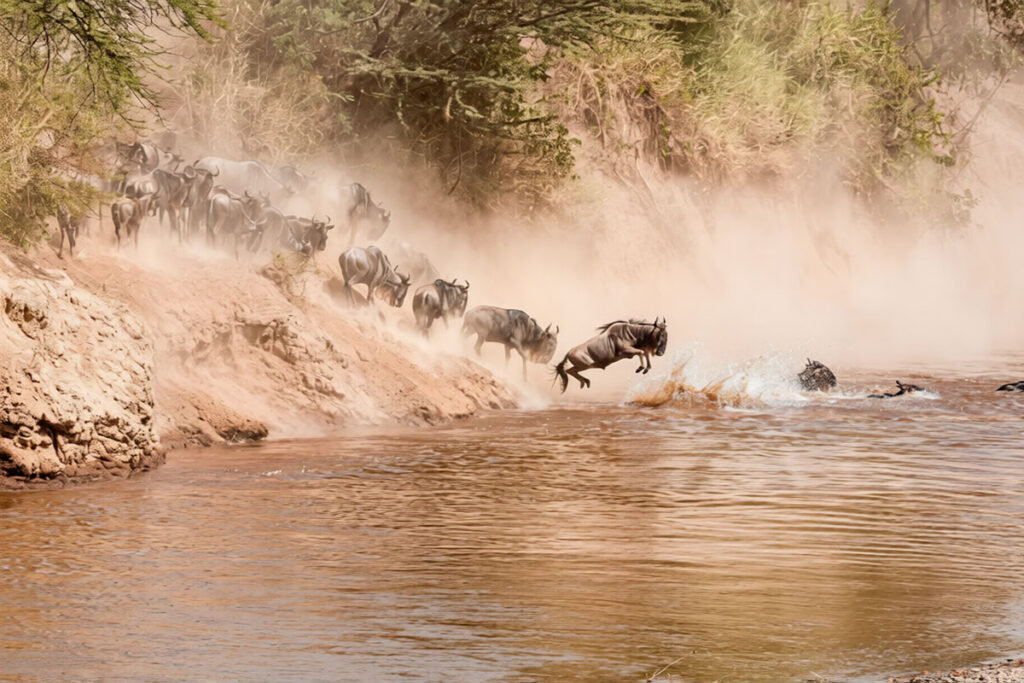
Great Wildebeest Migration in Kenya and Tanzania
Great Wildebeest Migration is one of the most extraordinary wildlife spectacles in Africa, unfolding across Tanzania’s Serengeti National Park and Kenya’s Masai Mara Game Reserve. This remarkable annual movement involves millions of wildebeests, accompanied by thousands of zebras and hundreds of gazelles, as they travel in search of fresh grazing grounds and water. Driven by seasonal rainfall and the changing availability of grass, the migration follows a natural cycle that brings drama, beauty and unforgettable wildlife encounters throughout the year.
For many travelers, witnessing the Great Wildebeest Migration is the highlight of an East African safari. From dramatic river crossings and calving season on the southern plains to vast columns of animals stretching across the horizon, every stage of the migration offers something different. While the herds are constantly on the move, understanding the seasons and key locations can greatly improve your chances of seeing this breathtaking phenomenon at its best.
What Is the Great Wildebeest Migration?
The Great Wildebeest Migration is a continuous movement of wildebeests through the Serengeti-Mara ecosystem. Rather than having a clear beginning or end, it is a year-round natural cycle shaped by rainfall, grass growth and survival. The herds move through different parts of the Serengeti and Masai Mara at different times of the year, following the availability of fresh pasture and water.
This migration is not only about movement. It is also a story of birth, survival and predator-prey interaction. Along the route, the herds face many challenges, including long-distance travel, dangerous river crossings and predators such as crocodiles, lions and other big cats. These natural events make the migration one of the most captivating wildlife experiences in the world.
Where Does the Great Wildebeest Migration Take Place?
The Great Wildebeest Migration takes place between two of Africa’s most celebrated safari destinations: Serengeti National Park in Tanzania and Masai Mara Game Reserve in Kenya. These vast ecosystems are connected, allowing the herds to move freely in response to seasonal changes.
Throughout the year, the wildebeests travel across different regions including the southern plains of the Serengeti, the central and western corridors, the northern Serengeti and the Masai Mara. Key migration areas also include Ndutu, Seronera, Ngorongoro Conservancy, the Mara River, the Grumeti River, the Namiri Plains and the Lobo area. Each of these locations offers a different perspective on the migration, from calving season and feeding grounds to river crossings and predator action.
Why the Great Wildebeest Migration Is So Special
The Great Wildebeest Migration is special because it is one of the largest and most dramatic wildlife movements on Earth. Seeing millions of animals on the move across open plains, woodlands and rivers creates a sense of scale and energy that is difficult to describe until experienced in person.
It is also one of the most dynamic safari experiences in Africa. No two sightings are exactly the same. In one season, you may witness newborn calves taking their first steps on the southern plains. In another, you may see wildebeests hesitating at a crocodile-filled riverbank before suddenly plunging into the water in a chaotic and thrilling crossing. The migration offers constant change, making every safari feel unique.
Mara River to Grumeti River Crossing
One of the most dramatic phases of the migration is the movement involving the Mara River and the Grumeti River. This stage usually begins around October, when millions of wildebeests brave the Mara River’s strong currents and crocodile-infested waters as they move from the Masai Mara in Kenya toward Serengeti’s Kirawira River in Tanzania. It is one of the most intense and memorable parts of the entire migration cycle.
This journey can take approximately six months, with the herds returning to the Masai Mara around April during the onset of the rains. The route and timing can vary depending on geographical conditions and the availability of water and grass. In some years, the herds may linger longer in certain grazing areas, often sharing the plains with zebras and gazelles before continuing their movement.
Seronera South and East Crossing
From November to December, as the rains begin, another important phase of the migration unfolds in the eastern Serengeti, including Seronera, Ndutu and the Ngorongoro Conservancy. During this time, the plains are filled with wildebeests feeding on fresh grass and preparing for the calving season.
This period is especially rewarding for travelers because it offers excellent game drive opportunities in Serengeti National Park. Visitors can watch large herds spread across the landscape, observe playful behavior among the animals and witness the early stages of the calving period that peaks between January and March.
In May, the migration shifts again toward the western Serengeti as the herds move northward in search of greener pastures. Their progress slows at the Grumeti River, where large numbers of wildebeests gather in the western corridor. This concentration is believed to be a strategy for safety, as the animals rely on strength in numbers before attempting to cross crocodile-rich waters.
Experiencing the Great Wildebeest Migration and Cycle
Witnessing the Great Wildebeest Migration is one of the most unforgettable safari experiences in East Africa. The best times to see this natural spectacle are from January to April and from July to October, when the herds move through some of the most accessible and dramatic parts of the Serengeti and Masai Mara ecosystem.
These months offer outstanding opportunities to observe different stages of the migration, from the calving season on the southern plains to the famous river crossings in the north. Planning your trip around these periods increases your chances of seeing nature at its most powerful and captivating.
The Great Migration in January, February and March
Each year around January, the Great Migration completes its southward movement along the eastern edge of the Serengeti into the Ngorongoro Conservation Area. This region is known for its nutrient-rich grass plains, which provide ideal conditions for the herds to give birth and raise newborn calves.
Although the migration has no fixed beginning or end, the calving season is often seen as the most symbolic starting point of the cycle. By late January or February, the herds gather on the short-grass plains that extend over the lower northern slopes of the Ngorongoro Crater highlands and around Olduvai Gorge. During this brief but remarkable window, approximately 400,000 calves are born over two to three weeks, which is equal to nearly 8,000 calves per day.
This abundance of vulnerable young animals attracts predators, creating a dramatic and action-packed season for wildlife viewing. Big cats and other predators take advantage of the easy prey, making this one of the most exciting times for visitors interested in both the birth season and predator activity. Travelers who want to experience this spectacle can stay at Asilia’s migration camps in the southern Serengeti, including Olakira, Kimondo and Ubuntu, which offer direct access to the herds.
The Great Migration in April and May
After the calving season in February and March, the wildebeest herds begin moving northwest in April toward the central Serengeti in search of fresher grass. Thousands of zebras and smaller groups of antelopes travel alongside them, creating one of the most visually impressive wildlife movements in Africa.
By May, long columns of wildebeests can stretch for several kilometers as they gather around the Moru Kopjes near Dunia Camp, one of the few camps in the Serengeti that offers migration viewing at this time. The mating season begins toward the end of May and male wildebeests can often be seen engaging in head-to-head battles. Even during this period of movement, the pace is not always hurried. The herds continue grazing along the way, making the central Serengeti especially rewarding for game drives.
As the movement gains momentum, the wildebeests gradually mass in the Serengeti’s Western Corridor. At this stage, Ubuntu Migration Camp relocates to follow the herds and provide access to the Grumeti River crossings. While not as widely known as the Mara River crossings, the Grumeti crossings still offer dramatic wildlife viewing, especially with large crocodiles waiting in the river’s pools and channels.
May is also the low season at Ubuntu, making safaris during this time particularly attractive for travelers looking for good value, fewer tourists and excellent wildlife viewing.
The Great Migration in June and July
In June, the dry season begins, bringing large concentrations of wildebeests to the Western Serengeti and the southern banks of the Grumeti River. This period marks the beginning of some of the most tense and memorable moments of the migration, as the herds must cross crocodile-infested waters to continue their journey north.
As June turns into July, hundreds of thousands of wildebeests and zebras continue moving along the western edge of the park toward the northern Serengeti. Ahead of them lies the Mara River, one of the most dangerous barriers on the migration route. These crossings are among the most thrilling wildlife events on the planet and usually begin around the start of the high season in July, although their exact timing always depends on natural conditions.
In July, the herds commonly gather in the Northern Serengeti. Asilia’s mobile migration camps and Sayari Camp provide excellent access for travelers who want to witness this spectacle in comfort. By late July, the animals that successfully cross the Mara River may also be found in the Masai Mara, where guests at Rekero Camp can often watch river crossings directly from the camp’s main deck during their Kenyan safari. At this time, daily crossings can sometimes be seen at both the Mara and Talek rivers, creating extraordinary wildlife moments.
The Great Migration in August, September and October
By August, the herds have crossed the Mara River and are spread throughout the northern Masai Mara, while many still remain in the northern Serengeti. This is one of the best times to witness the migration because the region holds large concentrations of animals and predator activity remains intense.
When the river is in full flow, the crossings can be chaotic and dangerous. Panic, confusion, strong currents and waiting predators can lead to significant losses among the herds. Even in years when the water flow is gentler, crocodiles, lions and other predators still ambush wildebeests on both sides of the river. Some crossings may involve just a few hesitant animals, while others become a relentless mass movement lasting for hours.
By September and October, the major chaos of the peak crossings begins to ease as the migrating columns gradually move eastward. However, the journey is far from over. The herds still face the Mara River again as they prepare to cross for their return journey southward.
The Great Migration in November and December
Following the East African short rains in late October and early November, the wildebeests begin moving down from Kenya into the eastern Serengeti. They pass through the Namiri Plains, an area widely known for exceptional cheetah sightings, before spreading through the eastern and southern Serengeti by December.
As the new year approaches, rainfall transforms the deep south of the Serengeti into a lush grazing area. This fresh grass attracts the returning herds of wildebeests, along with hundreds of thousands of zebras and other plains animals. The cycle then begins again as the calving season approaches once more.
Best Time to Visit the Great Wildebeest Migration
Choosing when to visit depends on which stage of the migration you most want to see. The Serengeti is a year-round safari destination with excellent wildlife viewing across its vast landscapes but planning around the migration can increase your chances of seeing large herds and major wildlife events.
Travelers interested in calving season and predator action should consider visiting from January to March. Those hoping to see the movement through central and western Serengeti may prefer April to July. If the goal is to witness the famous Mara River crossings and the herds in the north, July through October is usually the best time. For travelers interested in the return journey and the eastern Serengeti, October to December can be particularly rewarding.
Where to Go for the Best Viewing
Different parts of the Serengeti and Masai Mara offer the best viewing at different times of the year. Choosing the right region is one of the most important parts of planning a migration safari.
Visit the Southeast and Ndutu from December through May
This is the best area for seeing the herds during calving season, when the southern plains are filled with wildebeests and newborn calves. It is also an excellent time for predator sightings.
Explore the Western Corridor from May to July
The Western Corridor is ideal when the herds move toward the Grumeti River. This is a great time to see large concentrations of animals and dramatic river crossing activity in the west.
Head to the Serengeti Mara Area from July through October
This is the classic period for witnessing the migration in the north, including the famous Mara River crossings and large gatherings of wildebeests spread across the northern plains.
Check Out the Northern Serengeti and Lobo Area in October and November
During this stage, the herds are often moving through the northern and northeastern parts of the Serengeti as they begin their return south. This can be an excellent time to see large herds with fewer crowds than in peak crossing months.
Who Should Consider a Great Wildebeest Migration Safari?
A Great Wildebeest Migration safari is ideal for wildlife lovers, photographers, first-time safari travelers and seasoned Africa enthusiasts alike. It is especially rewarding for travelers who want to experience dramatic wildlife interactions, huge concentrations of animals and the raw rhythm of nature.
It is also a great choice for those who want to combine iconic safari landscapes with a deeper understanding of seasonal wildlife behavior. Whether you are interested in river crossings, calving season, predator action or simply the sight of endless herds across the plains, the migration offers something unforgettable.
Combine the Great Wildebeest Migration with Other Safari Experiences
A migration safari can be even more rewarding when combined with other East African experiences. Travelers can pair the Serengeti and Masai Mara with additional game drives, cultural encounters or extended safaris in other national parks and reserves.
This creates a richer itinerary that goes beyond following the herds, allowing you to experience more of East Africa’s wildlife, landscapes and natural diversity during one unforgettable journey.
Why the Great Wildebeest Migration Should Be on Your Safari Bucket List
The Great Wildebeest Migration is more than a safari highlight. It is a living cycle of movement, birth, survival and renewal that unfolds across two of Africa’s finest wildlife ecosystems. Few natural events compare to the energy, scale and raw beauty of watching thousands upon thousands of animals move together across the plains or leap into dangerous rivers in search of new grazing land.
For travelers seeking one of Africa’s most memorable wildlife experiences, the Great Wildebeest Migration remains a powerful reminder of the natural world in motion. With careful planning and the right timing, it offers a safari experience that is dramatic, emotional and truly unforgettable.