
Semuliki National Park
Semuliki National Park, Uganda: Complete Guide to Wildlife, Birding, Hot Springs & Safari Experiences
Semuliki National Park is one of Uganda’s most unique and ecologically rich safari destinations, located within the Semliki Valley along the western arm of the Albertine Rift. Covering approximately 220 square kilometers, the park lies between Lake Albert and Lake Edward, forming part of a 160km rift valley system known for its dramatic landscapes and biodiversity. This remarkable destination is home to the ancient Semliki Forest, one of Africa’s oldest tropical rainforests, which dates back to before the last ice age and supports species with deep evolutionary origins.
Adjacent to the park is the Toro-Semliki Wildlife Reserve, covering 545 square kilometers and offering a contrasting savanna experience. Together, these protected areas create a rare combination of Central African rainforest ecosystems and East African savanna habitats, making Semuliki National Park a truly distinctive destination for travelers exploring Uganda.
Semuliki National Park is a biodiversity hotspot, hosting 53 mammal species, including 11 primate species and an impressive 435 bird species, representing about 43% of Uganda’s total bird population. Its location at the intersection of multiple ecological zones allows it to support species from both Central and East Africa.
Landscape and Ecosystems
The park features a diverse range of ecosystems that support its rich biodiversity.
- Ancient lowland rainforest: Home to rare flora and fauna
- Wetlands and river systems: Including the Semliki River
- Geothermal features: Hot springs formed by Rift Valley activity
- Adjacent savanna: Found in Toro-Semliki Wildlife Reserve
Wildlife in Semuliki National Park
Semuliki supports a range of forest-dwelling species, particularly primates. The dense rainforest provides an ideal habitat for wildlife adapted to humid environments.
Primates
Visitors may encounter chimpanzees, baboons, black-and-white colobus monkeys, red-tailed monkeys and vervet monkeys during guided forest walks.
Other Mammals
Other species include forest elephants and buffaloes, although sightings are less frequent due to dense vegetation. For open savanna wildlife, the nearby Toro-Semliki Wildlife Reserve offers better viewing opportunities.
Birding in Semuliki National Park
With 435 bird species, Semuliki National Park is one of Uganda’s top birdwatching destinations, particularly for Congo biome species rarely seen elsewhere in East Africa.
Top Birding Areas
- Sempaya–Ntandi Road (6km): Offers views into the forest canopy
- Kirumia Trail (14km): Leads to the Semliki River through dense forest
Notable Bird Species
- Black dwarf hornbill
- Nkulengu rail
- Congo serpent eagle
- Gabon woodpecker
- Dwarf honeyguide
- Purple-breasted sunbird
Top Attractions in Semuliki National Park
Sempaya Hot Springs
The Sempaya Hot Springs are the most iconic and fascinating attraction in Semuliki National Park, drawing visitors from across Uganda and beyond. These geothermal springs are a direct result of the intense underground activity within the Albertine Rift Valley, offering a rare glimpse into the powerful natural forces shaping the region.
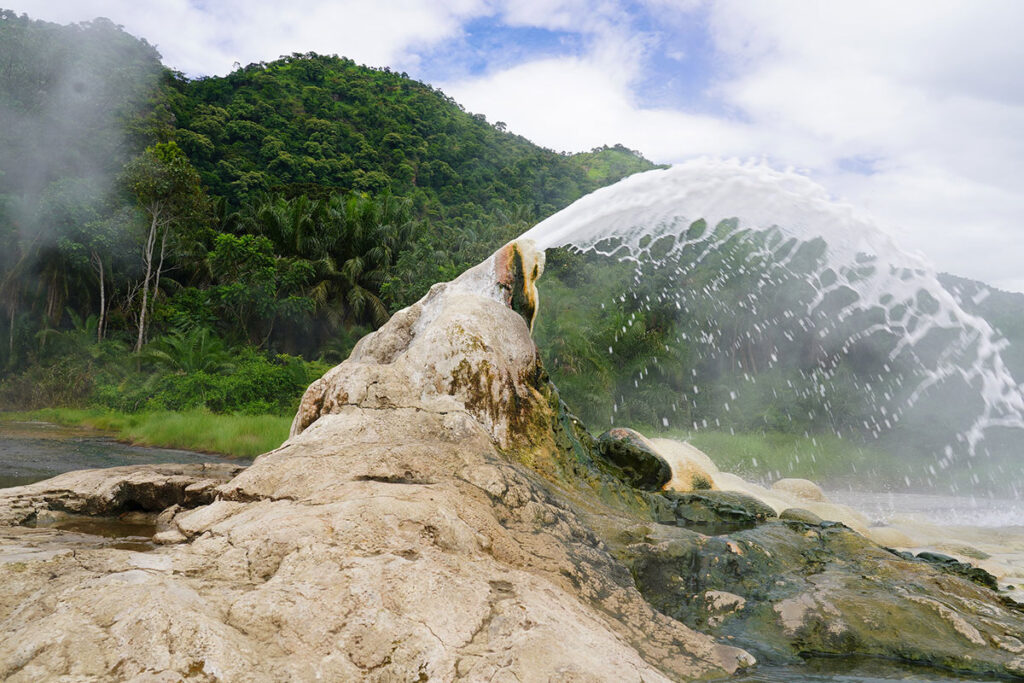
The hot springs consist of two main features: Nyansimbi (female) and Bintente (male). Nyansimbi, located near the Sempaya park headquarters, is a dramatic boiling geyser that shoots hot water and steam up to 2 meters high. The surrounding pools reach temperatures high enough to boil eggs, a popular and memorable activity for visitors.
Bintente, the male hot spring, lies about an hour’s walk from Nyansimbi through forest and swampy terrain. It is larger and less explosive but equally impressive, surrounded by lush vegetation and offering scenic views with the distant Rwenzori Mountains providing a stunning backdrop. Visiting both springs offers not only a unique geological experience but also a rewarding nature walk through the forest.
Top Activities in Semuliki National Park
Birdwatching
Birdwatching is the highlight of any visit to Semuliki National Park, making it one of Uganda’s premier destinations for birding enthusiasts. With over 435 bird species, the park is especially famous for its Congo biome species, many of which are rarely found elsewhere in East Africa.
Birders can explore trails such as the Kirumia Trail or the Sempaya–Ntandi road, where sightings may include rare species like the black dwarf hornbill, Nkulengu rail, Congo serpent eagle and Gabon woodpecker. The diversity of habitats—from dense forest to riverine areas—ensures rewarding birdwatching experiences throughout the year.
Nature Walks
Guided nature walks in Semuliki National Park offer an immersive way to explore the ancient rainforest and discover its hidden treasures. Accompanied by experienced ranger guides, visitors can learn about the park’s plant species, medicinal trees, insects and smaller wildlife.
These walks provide a deeper connection with nature compared to traditional game drives, allowing you to appreciate the forest’s intricate ecosystems, sounds and atmosphere up close.
Night Walks
Night walks in Semuliki National Park reveal a completely different side of the forest. As darkness falls, the forest comes alive with nocturnal species that are rarely seen during the day.
Visitors may encounter bushbabies, pottos, nocturnal birds and various insects, all while experiencing the unique sounds and mystery of the rainforest at night. This activity is ideal for adventurous travelers looking to experience the park beyond daylight hours.
Primate and Forest Walks
Primate tracking and forest walks through the Mugiri River Forest offer a chance to encounter habituated chimpanzees and other primates in their natural habitat. These guided walks typically last between 4 to 6 hours and provide an in-depth exploration of the forest ecosystem.
In addition to chimpanzees, visitors may also spot other primates such as red-tailed monkeys and black-and-white colobus monkeys. The experience combines wildlife viewing with education about primate behavior and conservation.
Game Drives in Toro-Semliki Wildlife Reserve
For those seeking a more traditional savanna safari experience, game drives in the nearby Toro-Semliki Wildlife Reserve provide a perfect complement to the forest environment of Semliki National Park.
The reserve’s open grasslands and woodland habitats are home to animals such as elephants, buffaloes, waterbucks, Uganda kob, warthogs and crocodiles. With a bit of luck, visitors may also spot predators such as lions and leopards. This contrast between forest and savanna makes Semliki a uniquely diverse destination.
Semuliki National Park Entry Fees
Park entry fees are charged per person per day and contribute to conservation, wildlife protection and park management. These fees help maintain infrastructure, support ranger operations and ensure sustainable tourism within the park.
Non-Residents
- Adults: USD 35 per person per day
- Children (5–15 years): USD 20 per child per day
Foreign Residents
- Adults: USD 25 per person per day
- Children: USD 10 per child per day
East African Citizens
- Adults: UGX 20,000 per person per day
- Children: UGX 5,000 per child per day
Fees may be updated periodically by the Uganda Wildlife Authority, so travelers are advised to confirm current rates before travel. Additional charges may apply for guided activities and specialized experiences.
Travel Distances to Semuliki National Park
- Kampala to Semuliki National Park: Approximately 290 km (4–5 hours by road)
- Fort Portal to Semuliki National Park: About 1 hour via Bwamba Road
- Semuliki to Queen Elizabeth National Park: Approximately 2–3 hours
These distances make Semuliki an excellent addition to a western Uganda safari itinerary.
Best Time to Visit Semuliki National Park
The best time to visit Semuliki National Park is during the dry seasons from June to September and January to February. During these months, trails are more accessible and wildlife viewing conditions are generally favorable.
Although the park may experience occasional rainfall, these periods still provide comfortable conditions for birdwatching, forest walks and exploring the park’s attractions.
How to Get to Semuliki National Park
By Road
Semuliki National Park is accessible via Fort Portal, which serves as the main gateway. Travelers can reach Fort Portal from Kampala via:
- Mubende route (290 km): Approximately 4–5 hours
- Mbarara–Kasese route (465 km): Offers scenic detours through other national parks
From Fort Portal, the journey to the park takes about one hour along the scenic Bwamba Road.
By Air
Chartered flights can be arranged to airstrips in the Toro-Semliki Wildlife Reserve, offering a faster and more convenient travel option.
What Makes Semuliki National Park Unique?
- One of Africa’s oldest tropical rainforests with ancient biodiversity
- Strong Congo biome influence with rare species
- Exceptional birdlife with over 435 species
- Unique geothermal hot springs within the Rift Valley
- Combination of rainforest and nearby savanna ecosystems
Why Visit Semuliki National Park?
- Exceptional birdwatching opportunities
- Unique forest safari experience
- Rich biodiversity and rare species
- Stunning landscapes and geological features
Travel Tips
- Carry insect repellent due to forest conditions
- Wear sturdy hiking boots for forest trails
- Bring binoculars for birdwatching
- Prepare for warm and humid weather
Final Thoughts
Semuliki National Park offers a truly unique safari experience in Uganda. Its ancient rainforest, rare wildlife and fascinating geothermal features make it an exceptional destination for travelers seeking something beyond the typical safari. Whether you are exploring forest trails, spotting rare birds or visiting the famous hot springs, Semuliki promises an unforgettable and enriching journey.