
Arusha National Park
Arusha National Park Safari Guide: Wildlife, Mount Meru Climbing, Entrance Fees, Activities, Costs and Travel Tips
Arusha National Park is one of Tanzania’s most scenic and diverse safari destinations, located just 25–40 kilometers from Arusha town in northern Tanzania. Covering approximately 137 square kilometers, this compact park offers an extraordinary blend of landscapes, wildlife and adventure activities, making it one of the most underrated yet rewarding parks in the country.
Unlike the vast savannah ecosystems of Serengeti or Tarangire, Arusha National Park is characterized by lush montane forests, volcanic craters, open plains and alkaline lakes. It is also home to Mount Meru, Tanzania’s second-highest peak at 4,566 meters, offering visitors a rare opportunity to combine a wildlife safari with mountain trekking.
What Makes Arusha National Park Unique
Arusha National Park stands out for its incredible diversity within a relatively small area. In a single day, visitors can explore dense rainforest, open grasslands, crater landscapes and lakes filled with birdlife.
One of its most unique features is the availability of walking safaris and canoe safaris, which are not commonly offered in many Tanzanian parks. These activities allow visitors to experience the environment more intimately, getting closer to wildlife and nature.
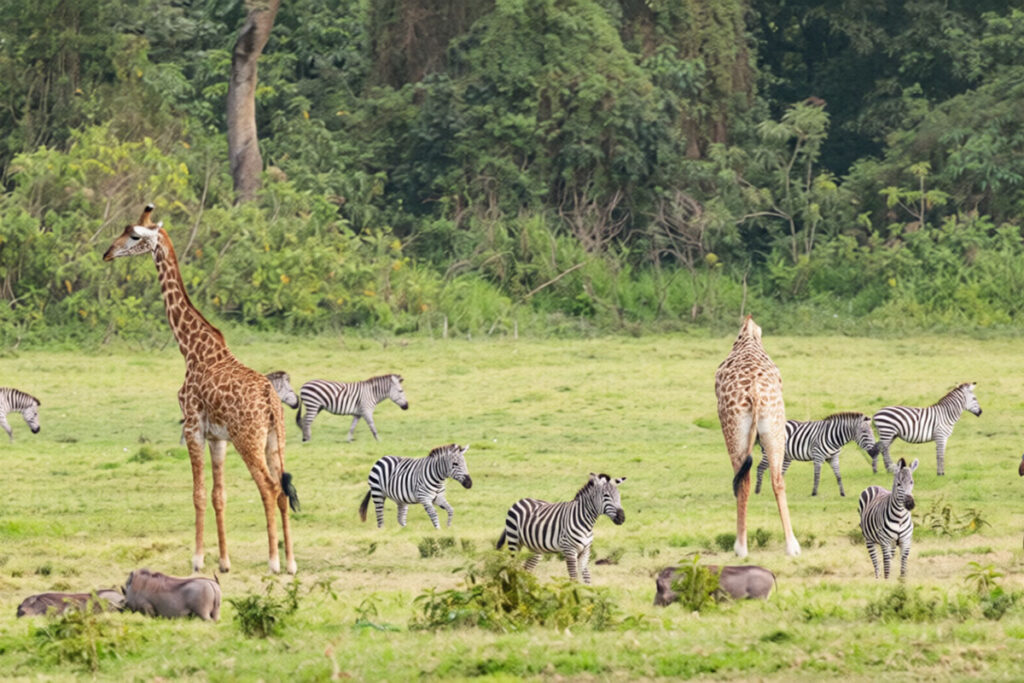
The park is also famous for its large populations of giraffes and black-and-white colobus monkeys, which are rarely seen in large numbers elsewhere in Tanzania. Combined with its proximity to Arusha town, it is ideal for short safaris, day trips or as the starting point for a northern Tanzania safari.
Location and Landscape of Arusha National Park
Arusha National Park is located in northern Tanzania, close to Arusha city and Kilimanjaro International Airport, making it one of the most accessible parks in the country.
The park’s landscape is remarkably diverse and includes:
- Mount Meru slopes: Covered in dense montane rainforest rich in primates and birdlife
- Ngurdoto Crater: A volcanic caldera often referred to as “Little Ngorongoro”
- Momella Lakes: A chain of shallow alkaline lakes known for flamingos
- Open plains and grasslands: Ideal for wildlife viewing and photography
This diversity of ecosystems supports a wide range of species and provides constantly changing scenery throughout the park.
Top Attractions in Arusha National Park
Mount Meru
Mount Meru is Tanzania’s second-highest mountain and one of the most scenic trekking destinations in East Africa. The climb typically takes 3 to 4 days and passes through multiple ecological zones, including rainforest, moorland and alpine desert.
The summit offers spectacular views of Mount Kilimanjaro and the surrounding landscapes. It is also commonly used as an acclimatization climb before attempting Kilimanjaro.
Ngurdoto Crater
The Ngurdoto Crater is a lush volcanic caldera with a swampy floor surrounded by forested walls. It is home to buffaloes, warthogs and various antelope species.
The crater rim provides excellent viewpoints for photography and wildlife observation.
Momella Lakes
The Momella Lakes are among the park’s most scenic features. These alkaline lakes attract flamingos and a wide variety of water birds.
The lakes vary in color depending on algae levels and minerals, creating a visually stunning landscape.
Tululusia Waterfalls
Located within the forest, these waterfalls are accessible via guided walking safaris and provide a refreshing and scenic highlight of the park.
Wildlife in Arusha National Park
Arusha National Park offers a diverse range of wildlife, particularly herbivores and primates. While it is not known for large predators, it provides excellent opportunities for close and relaxed wildlife viewing.
Common animals include giraffes, buffaloes, zebras, warthogs, waterbucks, bushbucks and dik-diks. The park is especially known for its large population of black-and-white colobus monkeys, often seen leaping through the forest canopy.
Leopards and hyenas are present but rarely seen. The absence of large predators makes the park ideal for walking safaris.
Birdwatching in Arusha National Park
With over 600 bird species recorded, Arusha National Park is one of Tanzania’s premier birdwatching destinations. The park’s diverse habitats support a wide range of species.
The Momella Lakes attract flamingos and other water birds, while forest areas host turacos, hornbills and eagles. Birdwatching is excellent year-round, especially during the wet season when migratory species arrive.
Game Drive Experience in Arusha National Park
Game drives in Arusha National Park are unique due to the combination of wildlife viewing and scenic landscapes. Drives typically last between 3 to 6 hours and can be customized to suit visitor preferences.
Key areas for game drives include:
- Momella Plains: Best for giraffes, buffaloes and zebras
- Ngurdoto Crater Rim: Offers panoramic views and wildlife sightings
- Forest Zones: Ideal for spotting colobus monkeys and birdlife
Morning and late afternoon drives are recommended for the best wildlife activity and lighting conditions for photography.
Canoe Safari Experience in Arusha National Park
Canoe safaris on the Momella Lakes offer a peaceful and unique way to explore the park. This activity allows visitors to observe wildlife and birds from the water, providing a completely different perspective.
Canoe safaris typically last 2 to 3 hours and cost between USD 30 and USD 50 per person.
During the experience, visitors may encounter flamingos, hippos, buffaloes and a variety of bird species along the lake shores.
Top Activities in Arusha National Park
Game Drives
Explore the park’s diverse landscapes and wildlife in a safari vehicle.
Walking Safaris
Guided walking safaris provide a close-up experience of nature and are conducted with armed rangers for safety.
Canoe Safaris
Enjoy a unique water-based safari experience on the Momella Lakes.
Mount Meru Trekking
Climbing Mount Meru is a multi-day adventure offering diverse ecosystems and stunning views.
Mount Meru Climbing Costs
- Park fees: USD 50–60 per person per day
- Rescue fee: Approximately USD 20
- Hut fees: Around USD 30 per night
- Guide fee (mandatory): USD 20 per day
- Ranger fee (mandatory): USD 20 per day
- Porter (optional): USD 10–15 per day
The total cost depends on group size and services but the climb typically takes 3 to 4 days.
Arusha National Park Entrance Fees (2026)
- Non-Residents: USD 50 (high season) / USD 45 (low season) + 18% VAT
- Children (5–15 years): USD 15 + VAT
- Residents: USD 25 (high season) / USD 22.5 (low season)
- East African Citizens: TZS 10,000
Vehicle Entry Fees
- Approximately USD 40–50 per vehicle per day
Concession Fees
- Approximately USD 59 per person per night (for lodges inside the park)
Opening Hours
The park is open daily from 6:00 AM to 6:00 PM.
Safari Cost Overview in Arusha National Park
- Budget safaris: USD 150–300 per person per day
- Mid-range safaris: USD 300–600 per person per day
- Luxury safaris: USD 600–1,000+ per person per day
Costs typically include park fees, vehicle and guide and accommodation.
Accommodation Options in Arusha National Park
- Hatari Lodge: Luxury eco-lodge with scenic views
- Momella Wildlife Lodge: Comfortable accommodation inside the park
- Meru View Lodge: Affordable option outside the park
What to Pack for Arusha National Park
- Light clothing in neutral colors
- Comfortable walking shoes
- Sunscreen and hat
- Rain jacket for forest areas
- Binoculars and camera
Safari Tips for Arusha National Park
Visit early morning or late afternoon for the best wildlife sightings. The park is ideal as a starting or ending point for a northern Tanzania safari.
Combine your visit with Kilimanjaro arrival or departure for convenience.
Why Choose Arusha National Park Over Other Parks
Arusha National Park is ideal for short safaris, walking experiences and scenic landscapes. It is less crowded and offers unique activities such as canoeing and mountain trekking.
Best Time to Visit Arusha National Park
The best time to visit is during the dry season from June to October, while the wet season offers lush scenery and excellent birdwatching.
How to Get to Arusha National Park
The park is located 25–40 kilometers from Arusha town and can be reached in about 40 minutes to 1 hour by road.
How Long Should You Stay in Arusha National Park?
A stay of 1 to 2 days is ideal for exploring the park.
Who Should Visit Arusha National Park?
The park is perfect for first-time safari travelers, families and those seeking a scenic and activity-rich experience.
Combine Arusha National Park with Other Destinations
Arusha National Park can be combined with Serengeti, Ngorongoro Crater, Tarangire and Lake Manyara for a complete northern Tanzania safari.
Plan Your Arusha National Park Safari
With its diverse landscapes, unique activities and accessibility, Arusha National Park offers one of the most rewarding safari experiences in Tanzania.