
Ngorongoro Conservation Area
Ngorongoro Conservation Area: Complete Guide to Wildlife, Safaris, Activities and Travel Tips
Ngorongoro Conservation Area is one of the most remarkable wildlife destinations in East Africa, offering a unique blend of breathtaking landscapes, dense wildlife populations and unforgettable safari experiences. Often described as a miniature version of the Serengeti, this iconic destination is globally recognized for the Ngorongoro Crater—an intact volcanic caldera that forms a natural enclosure for a wide range of wildlife.
Located in northern Tanzania, Ngorongoro is frequently referred to as the “eighth wonder of the world” due to its extraordinary geological formation and the incredible concentration of animals within a relatively small area. The crater spans approximately 10 miles in width, with steep walls rising about 2,000 feet, creating a self-contained ecosystem that supports a rich diversity of flora and fauna.
What Makes Ngorongoro Conservation Area Unique
The Ngorongoro Conservation Area stands out as one of Africa’s most extraordinary safari destinations due to its rare combination of geological, ecological and cultural features.
At its core is the Ngorongoro Crater, the world’s largest intact volcanic caldera, which forms a natural enclosure for wildlife. This unique structure creates one of the highest densities of animals in Africa, allowing visitors to see a wide range of species, including the Big Five, within a relatively small area.
Unlike many other safari destinations, Ngorongoro offers year-round wildlife viewing, as animals do not migrate out of the crater. The presence of permanent water sources supports a stable ecosystem that attracts both predators and herbivores throughout the year.
In addition to its wildlife, the conservation area’s cultural significance, scenic landscapes and accessibility from Arusha make it one of the most complete and rewarding safari experiences in East Africa.
The Ngorongoro Crater: A Natural Wildlife Sanctuary
The Ngorongoro Crater is the centerpiece of the conservation area and one of the most sought-after safari destinations in Africa. Its unique structure forms a natural enclosure where wildlife thrives year-round, making it one of the best places to experience a classic African safari in a single location.
The crater floor hosts a remarkable concentration of wildlife, offering visitors an excellent chance to see the famous Big Five—lions, elephants, buffaloes, leopards and black rhinos—often within a single game drive. The enclosed ecosystem supports a balanced and thriving population of predators and herbivores, creating an exceptional wildlife viewing experience.
Wildlife in Ngorongoro Conservation Area
Ngorongoro Conservation Area is one of the easiest places in Africa to spot a wide variety of wildlife in one location. The crater and surrounding landscapes are home to an impressive range of species, making every safari both diverse and rewarding.
Visitors can encounter large mammals such as elephants, buffaloes, giraffes, wildebeests, zebras and various antelope species including gazelles, impalas, hartebeests and kudus. Predators such as lions, leopards, spotted hyenas and even African hunting dogs can also be seen.
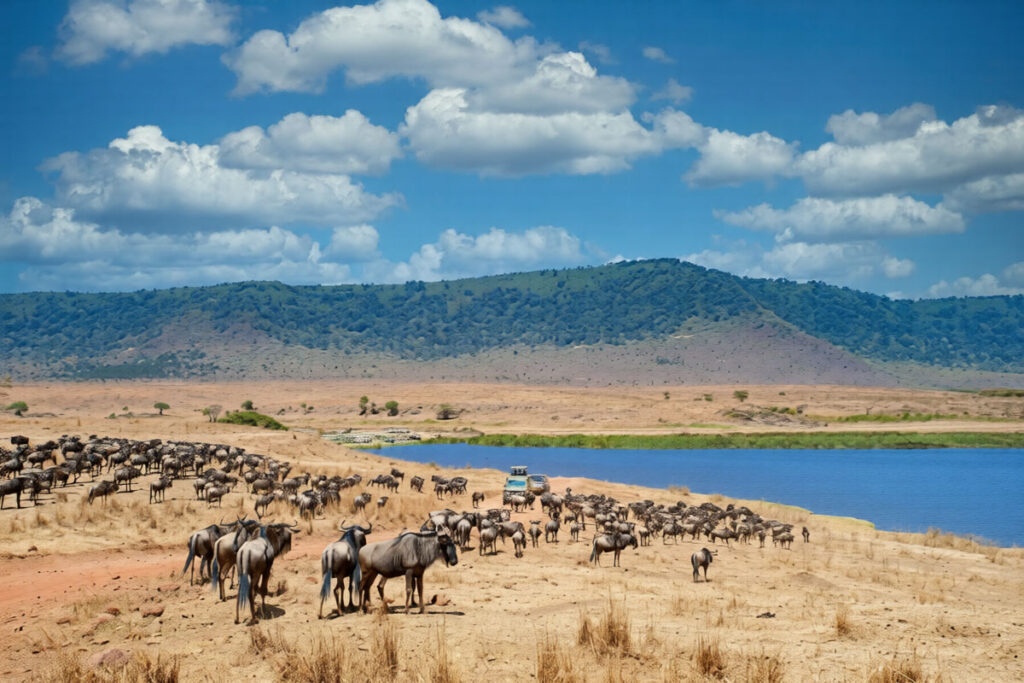
During dry periods, thousands of wildebeest gather along the crater rim and surrounding areas, creating spectacular wildlife scenes. Other species such as hippos, monkeys and smaller mammals further enrich the biodiversity of this extraordinary conservation area.
Bird Watching in Ngorongoro Conservation Area
Ngorongoro Conservation Area is a paradise for bird lovers, with over 500 recorded bird species. The diversity of habitats—including lakes, swamps, forests and open plains—creates ideal conditions for a wide range of birdlife.
Lake Makat attracts thousands of migratory flamingoes, while the surrounding wetlands provide excellent viewing opportunities for water birds. Bird enthusiasts can also spot species such as the Tawny Eagle, Red and Yellow Barbet, African Grey Flycatcher, Great White Pelican, Ostrich and Northern White Crowned Shrike.
Bird watching is rewarding throughout the year but the best months are from November to July when migratory species are present.
Top Activities in Ngorongoro Conservation Area
Game Drives in Ngorongoro
Game drives in Ngorongoro Conservation Area are the highlight of any visit. These safaris typically begin early in the morning around 6:00 AM or in the afternoon at 1:00 PM, when wildlife is most active.
Conducted in open-roof 4×4 vehicles, game drives provide excellent opportunities for wildlife viewing and photography. Visitors can expect to see elephants, lions, black rhinos, buffaloes, spotted hyenas, bat-eared foxes and large herds of antelopes and zebras.
Other fascinating animals such as bush babies, civets, aardvarks, dik-diks, jackals and mongooses can also be spotted, adding depth to the safari experience.
Bird Watching
Bird watching in Ngorongoro is a rewarding activity due to the area’s rich ecosystems and abundant species. The wetlands, forests and lakes create ideal habitats for both resident and migratory birds, making it a year-round destination for bird enthusiasts.
Nature Walks
Guided nature walks in Ngorongoro Conservation Area offer visitors the chance to explore the environment on foot. Led by experienced rangers, these walks range from short scenic strolls to longer hikes and provide a closer look at the area’s flora, fauna and landscapes.
Nature walks are typically conducted during daylight hours and can take place both inside and outside park boundaries, offering a more intimate and educational safari experience.
Cultural Experiences with the Maasai Community
One of the most unique aspects of the Ngorongoro Conservation Area is that it is not only a wildlife destination but also home to the Maasai people, who have lived in harmony with nature for generations. Unlike most national parks in Africa, Ngorongoro allows human settlement within the conservation area.
Visitors have the opportunity to experience Maasai culture through guided village visits, where they can learn about traditional lifestyles, cattle herding practices and the community’s deep connection to the land.
Activities may include traditional dances, visits to Maasai homesteads (bomas) and learning about local customs, dress and craftsmanship. These cultural experiences add depth to any safari and support community-based tourism.
Ngorongoro Conservation Area Entrance Fees and Safari Costs
The cost of visiting Ngorongoro Conservation Area includes conservation fees charged per person per day, as well as a crater service fee for vehicles descending into the crater.
These fees support conservation efforts, wildlife protection and park management. Total safari costs may also include transport, accommodation, guide services and meals, depending on the type of safari package chosen.
Where to Stay in Ngorongoro Conservation Area
Accommodation in Ngorongoro Conservation Area ranges from luxury lodges to budget-friendly options, catering to different travel styles and preferences.
Luxury Accommodation
- Ngorongoro Serena Safari Lodge
- Manyara Wildlife Safari Camp
- Lake Manyara Wildlife Lodge
- Ganako Luxury Lodge
- Acacia Farm Lodge
- Ndutu Safari Lodge
Midrange Accommodation
- Ngorongoro Rhino Lodge
- Gibbs’s Farm
- Ngorongoro Sopa Lodge
- Octagon Safari Lodge
- Ngorongoro Wildlife Lodge
Budget Accommodation
- Kifaru Lodge
- Eunoto Retreat
- Bougainvillea Safari Lodge
Best Time to Visit Ngorongoro Conservation Area
The best time to visit Ngorongoro Conservation Area depends on seasonal conditions and travel preferences.
The dry season from mid-May to mid-October is ideal for game viewing, as vegetation is thinner and animals are easier to spot. Wildlife tends to gather around water sources during this time.
The rainy seasons, particularly from January to March, offer lush landscapes and fewer tourists, although muddy roads may present some challenges.
How to Get to Ngorongoro Conservation Area
By Road
Ngorongoro Conservation Area is located approximately 3 – 4 hours from Arusha town by road. This is the most common way to access the park, offering scenic views along the journey.
Roads are generally in good condition, although some sections are gravel. A 4×4 vehicle is recommended for a comfortable safari experience.
By Air
Travelers can also reach Ngorongoro by air through scheduled or charter flights from Serengeti, Arusha and Lake Manyara, offering a faster and more convenient option.
Why Visit Ngorongoro Conservation Area?
Ngorongoro Conservation Area offers one of the most complete safari experiences in Africa, combining rich wildlife, dramatic landscapes and cultural encounters in one destination.
Its unique crater ecosystem, high density of animals and accessibility make it ideal for both first-time visitors and experienced safari travelers looking for a diverse and unforgettable experience.