
Lake Mburo National Park
Lake Mburo National Park, Uganda: Complete Safari Guide, Wildlife, Activities, Birding & Travel Tips
Nestled in western Uganda, Lake Mburo National Park is renowned for its scenic beauty and diverse habitats. Despite its relatively small size, the park hosts 69 mammal species and approximately 332 bird species, making it one of the most rewarding parks for short safaris.
The park is particularly unique because it is the only national park in Uganda where impalas can be found and one of the few in western Uganda where visitors can see zebras and elands. The recent introduction of Rothschild’s giraffes has further enhanced the park’s wildlife diversity.
Lake Mburo National Park is one of Uganda’s most accessible and diverse safari destinations, strategically located between Kampala and the western national parks. Covering approximately 370 square kilometers, Lake Mburo National Park may be smaller than other parks in Uganda but it stands out as a compact jewel of biodiversity, offering a rich mix of landscapes and wildlife experiences within a relatively short distance.
The park’s varied ecosystems—including savannas, acacia woodlands, rocky outcrops, forests, swamps and lakes—support an impressive range of wildlife and bird species. Its proximity to the main southwest tourism circuit makes it an ideal stopover for travelers heading to destinations such as Bwindi Impenetrable National Park or Queen Elizabeth National Park.
Landscape and Ecosystems
Lake Mburo National Park features a mosaic of landscapes that create a rich and varied ecosystem supporting diverse wildlife.
- Open savannas: Ideal for grazing animals like zebras and impalas
- Acacia woodlands: Provide habitat for birds and small mammals
- Rocky outcrops: Offer scenic viewpoints and shelter for wildlife
- Wetlands and lakes: Support aquatic life and bird species
- Forested areas: Found in places like Rubanga Forest
Wildlife in Lake Mburo National Park
Lake Mburo National Park supports a wide variety of wildlife, making it a rewarding destination for both first-time visitors and experienced safari travelers.
Herbivores and Grazing Animals
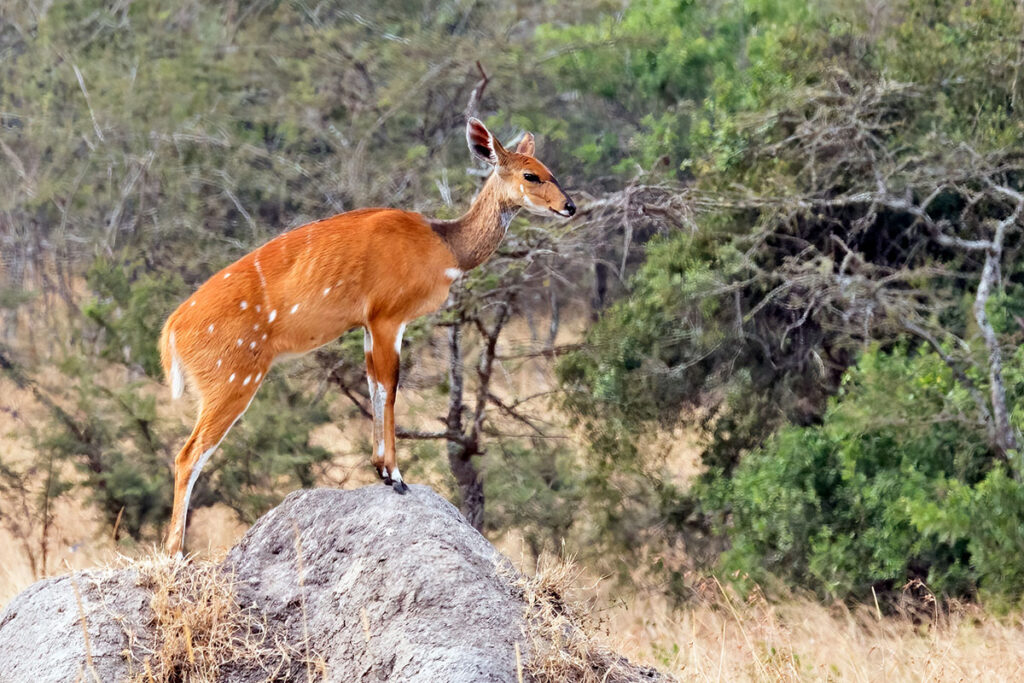
The park is home to large populations of herbivores, including zebras, impalas, elands, buffaloes, waterbucks and warthogs. These animals are often seen grazing in open plains and along the lakeshores, providing excellent opportunities for wildlife viewing and photography.
Impalas are particularly significant, as Lake Mburo is the only place in Uganda where they can be seen in the wild.
Predators
Although less frequently seen, predators such as leopards and hyenas inhabit the park. These elusive animals are best spotted during early morning or night game drives.
Birding in Lake Mburo National Park
With over 332 bird species, Lake Mburo National Park is a haven for birdwatchers. The park’s diverse habitats provide ideal conditions for both resident and migratory bird species.
Key Birding Areas
- Acacia woodlands along Research Track
- Lake shores near Rwonyo
- Papyrus wetlands in the northern areas
Bird enthusiasts can spot species such as pelicans, herons, fish eagles, African finfoot and the rare shoebill.
Top Activities in Lake Mburo National Park
Boat Safari on Lake Mburo
A boat safari on Lake Mburo is one of the most relaxing and rewarding experiences in the park, offering a completely different perspective compared to game drives. Departing from the jetty near Rwonyo Rest Camp, the boat trip takes you along the calm waters of the lake where wildlife gathers along the shoreline. Visitors can enjoy close-up sightings of hippopotamuses and Nile crocodiles, often seen basking or partially submerged in the water.
The lake is also a hotspot for birdlife, making this activity especially appealing for birdwatchers. Species such as African fish eagles, pelicans, herons, kingfishers and the elusive African finfoot can often be spotted. The peaceful setting, combined with excellent wildlife viewing, makes the boat safari a must-do activity in Lake Mburo National Park.
Game Drives
Game drives in Lake Mburo National Park offer an exciting way to explore its diverse landscapes and observe wildlife in their natural habitat. The park’s network of well-maintained game tracks allows visitors to access different ecosystems, including open savannas, acacia woodlands and lake shores.
During a typical game drive, visitors can encounter animals such as zebras, impalas, buffaloes, elands, waterbucks and warthogs. The park is particularly known for its large populations of impalas, which are not found in any other national park in Uganda. Early morning and late afternoon game drives provide the best opportunities for wildlife sightings, as animals are more active during cooler hours.
Night Game Drives
Night game drives in Lake Mburo National Park offer a unique opportunity to explore the park after dark and discover its nocturnal wildlife. Accompanied by a trained ranger guide, visitors use spotlights to scan the bush for animals that are rarely seen during the day.
This experience may reveal fascinating nocturnal species such as bushbabies, pottos, genets and even predators like leopards if luck is on your side. The quiet and mysterious atmosphere of the park at night adds an adventurous element to the safari experience.
Guided Nature Walks and Salt Lick Experience
Lake Mburo National Park is one of the few parks in Uganda where visitors can enjoy guided walking safaris. These walks provide a more intimate and immersive way to experience the wilderness, allowing you to connect with nature on foot.
A highlight of this activity is the visit to a natural salt lick near Rwonyo. From a raised observation platform, visitors can quietly watch animals gathering to lick mineral-rich soil. This offers a rare opportunity to observe wildlife behavior up close in a calm and undisturbed setting.
Forest Walks in Rubanga Forest
Rubanga Forest, located on the western side of the park, offers a completely different ecosystem compared to the open savannas. Guided forest walks here are ideal for birdwatchers and nature lovers, as the forest is home to a variety of forest bird species and small mammals.
The cool, shaded environment and rich biodiversity make Rubanga Forest a peaceful escape and a perfect addition to the overall safari experience.
Horseback Safaris
Horseback safaris are one of the most unique experiences offered in Lake Mburo National Park. Operated by Mihingo Lodge, this activity allows visitors to explore the park without the noise of vehicles, offering a peaceful and immersive way to observe wildlife.
Riding alongside grazing zebras and antelopes provides a rare and unforgettable perspective of the park’s landscapes. Horseback safaris are suitable for both beginners and experienced riders and are guided by trained professionals.
Mountain Biking
For adventure enthusiasts, mountain biking in Lake Mburo National Park offers an exciting way to explore the park’s terrain. Guided cycling tours take visitors along designated trails, where they can experience the landscape up close while spotting wildlife along the way.
This activity combines physical adventure with wildlife viewing, making it a great option for active travelers.
Viewpoints
Lake Mburo National Park is home to several scenic viewpoints that offer breathtaking panoramic views of the surrounding landscape. Kigarama Hills provide sweeping views of Lake Mburo and its surrounding savannas, while Kazuma Lookout offers a vantage point overlooking multiple lakes and rolling hills.
These viewpoints are ideal for photography, relaxation and appreciating the natural beauty of the park.
Lake Mburo National Park Entry Fees
Park entry fees are charged per person per day and contribute to conservation, wildlife protection and park management. These fees support the preservation of the park’s ecosystems and ensure sustainable tourism.
Non-Residents
- Adults: USD 40 per person per day
- Children (5–15 years): USD 20 per child per day
Foreign Residents
- Adults: USD 30 per person per day
- Children: USD 10 per child per day
East African Citizens
- Adults: UGX 20,000 per person per day
- Children: UGX 5,000 per child per day
Fees may be updated periodically, so travelers are encouraged to confirm current rates before travel. Additional costs may apply for specific activities such as boat safaris, guided walks and night game drives.
Accommodation in Lake Mburo National Park
Lake Mburo National Park offers a wide range of accommodation options to suit different budgets and travel preferences. From luxury eco-lodges to budget-friendly camps, visitors can choose accommodations that match their comfort level while staying close to nature.
Luxury Lodges
- Mihingo Lodge: A luxury eco-lodge set on a rocky outcrop, offering stunning panoramic views, horseback safaris and an exclusive, tranquil safari experience.
Mid-Range Lodges
- Rwakobo Rock Lodge: A popular eco-lodge with scenic views and comfortable accommodation near the park entrance.
- Arcadia Cottages: Cozy cottages overlooking Lake Mburo, ideal for relaxation and easy access to activities.
- Mburo Safari Lodge: Offers convenient access to the park and comfortable facilities for mid-range travelers.
Budget Options
- Eagles Nest Camp: Affordable accommodation with panoramic views of the surrounding landscape.
- Leopard Rest Camp: A budget-friendly option close to the park with basic amenities.
- Rwonyo Rest Camp: Managed by Uganda Wildlife Authority, offering simple accommodation within the park.
What Makes Lake Mburo National Park Unique?
- Only park in Uganda with impalas: A rare opportunity to see this species in the wild
- Best destination for walking safaris: One of the few parks allowing guided walking experiences
- Horseback safaris: A unique way to explore the park without vehicles
- Close proximity to Kampala: Easily accessible within a few hours
- Diverse ecosystems: A mix of lakes, savannas, forests and wetlands in a compact area
Best Time to Visit Lake Mburo National Park
The best time to visit Lake Mburo National Park is during the dry seasons from June to August and December to February. During these periods, wildlife gathers around water sources, making sightings easier and more predictable.
The dry season also offers better road conditions and clearer views for photography. However, the park remains open year-round, with the wet season providing lush scenery and excellent birdwatching opportunities.
How to Get to Lake Mburo National Park
By Road
Lake Mburo National Park is located approximately 228 kilometers from Kampala and can be reached in about 3.5 hours via the main southwest highway. Its convenient location makes it one of the easiest national parks to access in Uganda.
By Air
For travelers seeking a quicker option, domestic flights are available, offering convenient access to the park and surrounding areas.
Why Visit Lake Mburo National Park?
- Perfect destination for short safaris and weekend getaways
- Unique wildlife species including impalas and zebras
- Wide range of activities beyond traditional game drives
- Rich birdlife with over 332 species
- Beautiful landscapes with lakes and rolling hills
Travel Tips
- Plan early morning or evening game drives for the best wildlife sightings
- Carry binoculars for birdwatching and distant wildlife
- Wear comfortable and neutral-colored clothing
- Book accommodation in advance, especially during peak seasons
Final Thoughts
Lake Mburo National Park offers a rich and rewarding safari experience despite its smaller size. Its accessibility, diverse wildlife and variety of activities make it an ideal destination for travelers exploring Uganda. Whether you are looking for a quick wildlife escape or a peaceful nature retreat, Lake Mburo delivers an experience that is both memorable and fulfilling.