
Queen Elizabeth National Park
Queen Elizabeth National Park, Uganda: Ultimate Safari Guide, Wildlife, Entry Fees, Activities, Sectors, Accommodation & Travel Tips
Queen Elizabeth National Park is Uganda’s most visited and one of the most diverse safari destinations in East Africa. Located in the southwestern region of Uganda, the park is renowned for its exceptional biodiversity, scenic landscapes and wide variety of safari experiences. From thrilling game drives and boat cruises to chimpanzee tracking and birdwatching, Queen Elizabeth National Park offers a complete and immersive wildlife adventure for travelers of all interests.
Spanning approximately 1,978 square kilometers, the park is home to over 95 mammal species and more than 600 bird species, making it one of the richest ecosystems on the continent. Its unique location between the Rwenzori Mountains and the western arm of the Great Rift Valley creates a remarkable blend of habitats that support an incredible diversity of wildlife.
Established in 1952 as Kazinga National Park and renamed in 1954 in honor of Queen Elizabeth II, the park has grown into Uganda’s flagship safari destination. Its accessibility from Kampala and Entebbe, combined with its well-developed tourism infrastructure, makes it a key highlight for visitors exploring Uganda.
Landscape and Ecosystems
One of the park’s defining features is its varied landscape, which includes multiple ecosystems that support different wildlife species.
- Open savanna plains: Ideal for game drives and spotting large mammals
- Wetlands and swamps: Support birdlife and aquatic species
- Forests: Found in Kyambura Gorge and Maramagambo, home to primates
- Crater lakes: Scenic volcanic features offering breathtaking views
- Kazinga Channel: A major wildlife attraction connecting Lake George and Lake Edward
Wildlife in Queen Elizabeth National Park
Large Mammals and Herbivores
Queen Elizabeth National Park hosts a wide variety of herbivores, including elephants, buffaloes, hippos, warthogs and antelope species such as Uganda kob, bushbuck and waterbuck. These animals are commonly seen grazing in large numbers, particularly in the Kasenyi Plains and along the Kazinga Channel.
Predators and Big Game Encounters
The park is home to several predators, including lions, leopards and spotted hyenas. Lions are frequently seen in the Kasenyi sector hunting Uganda kob, while leopards are more elusive and are typically spotted during early morning or evening game drives. Hyenas are often heard at night and occasionally seen during drives.
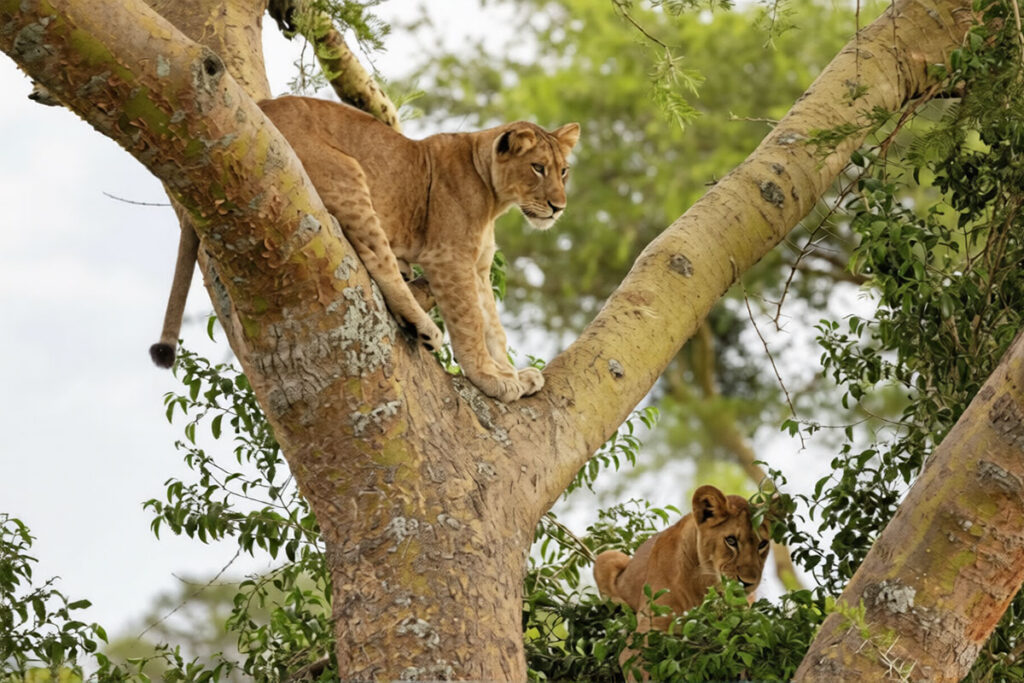
Tree-Climbing Lions in Ishasha Sector
The Ishasha sector is one of the few places in Africa where tree-climbing lions can be observed. These lions often rest in large fig trees during the heat of the day, offering a unique and unforgettable wildlife experience.
Primates and Chimpanzees
In addition to large mammals, the park offers primate experiences. Kyambura Gorge is the main location for chimpanzee tracking, where visitors trek through a forested valley to observe chimpanzees. Other primates include black-and-white colobus monkeys, red-tailed monkeys, vervet monkeys and baboons.
Top Activities in Queen Elizabeth National Park
Game Drives in Kasenyi Plains
Game drives in the Kasenyi Plains provide excellent opportunities to see wildlife in open savanna landscapes. Early morning drives are particularly rewarding, as animals are most active during cooler hours.
Ishasha Game Drives
The Ishasha sector offers a quieter and more exclusive safari experience, with opportunities to see tree-climbing lions, elephants, buffaloes and other wildlife.
Kazinga Channel Boat Cruise
The Kazinga Channel boat cruise is one of the most popular activities in the park. This natural waterway attracts large concentrations of animals, including hippos, crocodiles, elephants and buffaloes. The cruise also provides excellent birdwatching opportunities and allows visitors to observe wildlife at close range.
Chimpanzee Tracking in Kyambura Gorge
Chimpanzee tracking in Kyambura Gorge offers a unique experience in a forested valley surrounded by savanna. Guided treks allow visitors to search for chimpanzees while exploring this scenic environment.
Nature Walks in Maramagambo Forest
Maramagambo Forest offers guided nature walks where visitors can explore forest ecosystems, observe primates and visit bat caves. These walks provide a more intimate experience with nature.
Birding in Queen Elizabeth National Park
With over 600 bird species recorded, Queen Elizabeth National Park is one of the best birdwatching destinations in Africa. The park’s diverse habitats support a wide range of birdlife, including waterbirds, savanna species and forest birds.
Top Birding Locations
- Kazinga Channel – Ideal for waterbirds and large flocks
- Maramagambo Forest – Home to forest bird species
- Katwe Area – Seasonal flamingos and wetland birds
- Ishasha Sector – Possible sightings of the shoebill stork
Key Sectors of Queen Elizabeth National Park
Kasenyi Sector
The Kasenyi Plains are the primary wildlife viewing area of Queen Elizabeth National Park and are widely regarded as the best location for classic safari game drives. This expansive savanna landscape is dominated by large herds of Uganda kob, which in turn attract predators such as lions, making it one of the most reliable areas for predator sightings in Uganda. The open terrain allows for excellent visibility, increasing the chances of spotting elephants, buffaloes, warthogs and hyenas. Early morning and late afternoon game drives in Kasenyi offer the most rewarding wildlife encounters.
Mweya Peninsula
Mweya Peninsula is the central tourism hub of Queen Elizabeth National Park and a key highlight for most visitors. Strategically located between Lake Edward and the Kazinga Channel, Mweya offers breathtaking panoramic views and easy access to major safari activities. This area hosts several lodges, a visitor center and serves as the departure point for the famous Kazinga Channel boat cruise. Its central location makes it an ideal base for exploring different parts of the park while enjoying comfortable accommodation and stunning scenery.
Ishasha Sector
Located in the southern part of the park near the border with Bwindi Impenetrable National Park, the Ishasha sector is famous for its rare tree-climbing lions. These lions are often seen resting in large fig trees during the heat of the day, providing a unique and unforgettable wildlife experience. Ishasha offers a quieter and more exclusive safari environment compared to the northern sectors, with fewer vehicles and a more remote feel. In addition to lions, visitors can spot elephants, buffaloes, topi antelopes and a variety of bird species.
Kyambura Gorge
Kyambura Gorge, often referred to as the “Valley of Apes,” is a dramatic forested gorge carved into the savanna landscape. This unique ecosystem provides one of the most scenic chimpanzee tracking experiences in Uganda. The lush forest contrasts sharply with the surrounding grasslands, creating a striking visual effect. In addition to chimpanzees, the gorge is home to several primate species and diverse birdlife, making it an excellent destination for nature lovers and photographers.
Top Attractions in Queen Elizabeth National Park
Kazinga Channel
The Kazinga Channel is one of the most important wildlife attractions in Queen Elizabeth National Park. This natural waterway connects Lake George and Lake Edward and attracts large concentrations of animals, particularly during the dry season. The channel is home to one of the highest densities of hippos in Africa, along with crocodiles, elephants, buffaloes and countless bird species. A boat cruise along the Kazinga Channel provides close-up wildlife viewing and is considered one of the best safari experiences in Uganda.
Crater Lakes
Queen Elizabeth National Park features numerous volcanic crater lakes formed by ancient volcanic activity. These lakes are scattered across the park, especially along the scenic Crater Drive. The viewpoints overlooking these lakes offer breathtaking panoramic landscapes, making them ideal for photography and relaxation. Some crater lakes are saline, while others are freshwater, each supporting unique ecosystems.
Katwe Salt Lake
Katwe Salt Lake is both a cultural and historical attraction within the park. Local communities have been practicing traditional salt mining here for generations, using methods that have remained largely unchanged over time. Visitors can take guided tours to learn about the salt extraction process, interact with local miners and gain insight into the importance of this activity for the surrounding communities.
Queen Elizabeth National Park Entry Fees
Park entry fees are charged per person per day and contribute directly to conservation, wildlife protection and park management efforts.
Non-Residents (Foreign Tourists)
- Adults: USD 40 per person per day
- Children (5–15 years): USD 20 per child per day
Foreign Residents
- Adults: USD 30 per person per day
- Children: USD 10 per child per day
East African Citizens
- Adults: UGX 20,000 per person per day
- Children: UGX 5,000 per child per day
Accommodation in Queen Elizabeth National Park
Queen Elizabeth National Park offers a wide range of accommodation options to suit different budgets and travel preferences, from luxury lodges with premium amenities to budget-friendly campsites for adventurous travelers.
Luxury Lodges
- Mweya Safari Lodge: Located on Mweya Peninsula with stunning views of Kazinga Channel and Lake Edward
- Ishasha Wilderness Camp: Exclusive lodge offering an intimate experience in the Ishasha sector
- Kyambura Gorge Lodge: Luxury eco-lodge near Kyambura Gorge, ideal for chimpanzee tracking
Mid-Range Lodges
- Elephant Plains Lodge: Offers panoramic views and comfortable accommodation
- Buffalo Safari Lodge: Overlooks Kazinga Channel with excellent wildlife sightings
- Twin Lakes Safari Lodge: Located near crater lakes with scenic surroundings
Budget Options
- UWA Bandas: Affordable government-run accommodation
- Campsites: Basic facilities for travelers seeking a more adventurous experience
Best Time to Visit Queen Elizabeth National Park
Dry Season (December to February & June to September)
The dry season is the best time for wildlife viewing, as animals gather around water sources and vegetation is less dense, making it easier to spot wildlife. Roads are also more accessible during this period.
Wet Season (March to May & November)
During the wet season, the park becomes lush and green, offering excellent birdwatching opportunities, especially for migratory species. However, some roads may become muddy and difficult to navigate.
How to Get to Queen Elizabeth National Park
By Road
The park is accessible from Kampala or Entebbe via two main routes:
- Fort Portal Route (410 km): Offers scenic views of the Rwenzori Mountains
- Mbarara Route (420 km): Passes through Lake Mburo National Park and connects to Ishasha and Bwindi
By Air
Domestic flights are available from Entebbe International Airport to nearby airstrips such as Kasese, Mweya and Ishasha. Flying significantly reduces travel time and offers aerial views of Uganda’s landscapes.
What Makes Queen Elizabeth National Park Unique?
- Rare tree-climbing lions found in the Ishasha sector
- Boat safaris on the wildlife-rich Kazinga Channel
- Over 600 bird species making it a top birding destination
- Combination of savanna, forest and wetland ecosystems in one park
- Accessible location with well-developed tourism infrastructure
Why Visit Queen Elizabeth National Park?
- Offers a wide variety of wildlife and habitats
- Multiple safari activities in one destination
- Ideal for both short and extended safari itineraries
- Easy to combine with Bwindi Impenetrable National Park for gorilla trekking
Who Should Visit Queen Elizabeth National Park?
- First-time safari travelers looking for a complete experience
- Wildlife enthusiasts and photographers
- Birdwatchers interested in diverse species
- Travelers exploring southwestern Uganda
Travel Tips for Visiting Queen Elizabeth National Park
- Carry binoculars for better wildlife viewing
- Wear neutral-colored clothing during game drives
- Book activities and accommodation in advance during peak seasons
- Travel with experienced guides for better wildlife sightings
- Bring a camera with a zoom lens for photography
Final Thoughts
Queen Elizabeth National Park offers one of the most complete and rewarding safari experiences in Uganda. With its diverse wildlife, stunning landscapes and wide range of activities, it remains a must-visit destination for anyone planning a safari in East Africa.